Search


Search


Guides & Fact Sheets

This article provides tips to help parents regarding their children’s utilization of media, especially ways to avoid sexual encounters online.
- Created by Dr. Sheri Madigan, Dr. Gina Dimitropoulos and Nina Anderson.
Guides & Fact Sheets

This guide, designated for people who advocate for children's rights, provides 16 tips to help praticionners better intervene with this population and their family.
- Created by Renee DeBoard-Lucas, Kate Wasserman, Betsy McAlister Groves, and Megan Bair-Merritt.
Guides & Fact Sheets
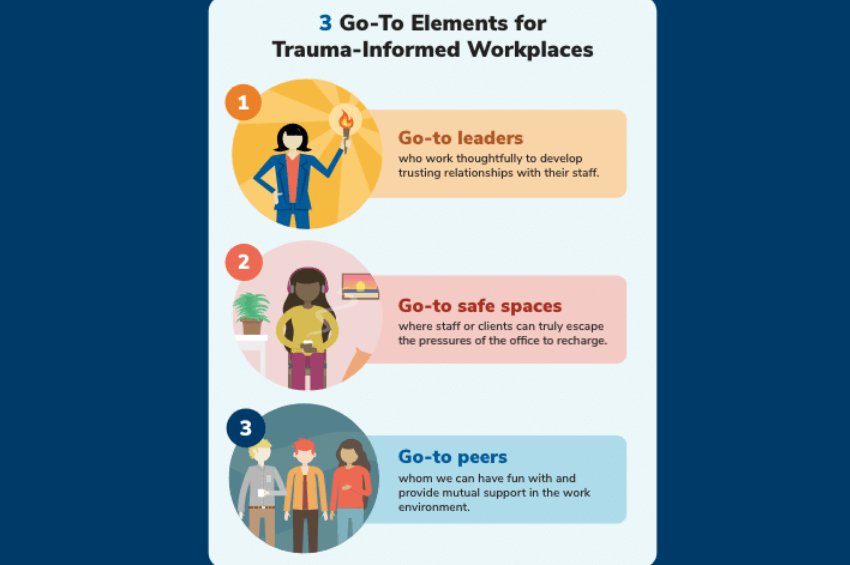
This infographic presents three ways organizations can use to create a trauma-informed environment at work.
- Created by the Crisis and Trauma Resource Institute.
Guides & Fact Sheets

This infographic provides information on a new training for OPHPR employees about the role of trauma-informed care during public health emergencies. The training aimed to increase responder awareness of the impact that trauma can have in the communities where they work. Participants learned SAMHSA’s six principles that guide a trauma-informed approach, including: Safety, Trustworthiness & transparency, Peer support, Collaboration & mutuality, Empowerment & choice, and Cultural, historical & gender issues.
- Created by CDC’s Office of Public Health Preparedness and Response (OPHPR), in collaboration with SAMHSA’s National Center for Trauma-Informed Care (NCTIC).
Guides & Fact Sheets
Free
In her presentation, Sue Bennett outlined the UN Convention on the Rights of the Child and advocated for a child rights approach to child protection. She emphasized the scientific basis of early childhood development as a social determinant of health.
- Created by Sue Bennett.
Guides & Fact Sheets
This resource offers a de tailed list of symptoms of complex post-traumatic stress disorder. It also provides a definition and more precise information on certain symptoms.
- Created by The Foundation for Post-Traumatic Healing and Complex Trauma Research.
Guides & Fact Sheets

This fact sheet offers tips to parents on how to help young children, toddlers, and preschoolers heal after a traumatic event.
- Created by the National Child Traumatic Stress Network.
Guides & Fact Sheets

This fact sheet describes how young children, school-age children, and adolescents react to traumatic events and offers suggestions on how parents and caregivers can help and support them.
- Created by the National Child Traumatic Stress Network.
Guides & Fact Sheets

This guide takes a step-by-step approach to learning more about the effects of toxic stress.
- Created by the Center on the Developing Child.
Guides & Fact Sheets

Free
This guide offers seven guidelines that were extrapolated from the trauma psychology literature, both scientific and professional. Recognizing the ubiquity of trauma histories in the human experience and hence the broad, transdiagnostic relevance of trauma psychology to professional practice, these guidelines address the potential etiological role of the complexity of a client’s trauma history without focusing on specific disorders or treatments; that is, transdiagnostically, for all mental health problems with which they may present.
- Created by the American Psychological Association.